
 Many freelancers become sole traders when starting out in business, seeing this as the right option for them at the time. What happens if you want to form a company in the future?
[more]

First Timer or Veteran IT Contractor?
All the information, tools and resources you need to operate a successful professional contracting business.
Calculators
Contractor Calculators | IR35 Calculator | Dividend Calculator
IR35
What is IR35? | IR35 insurance | IR35 History | IR35 Contract Templates
Limited or Umbrella?
Become a Contractor | Set Up a Company | Limited vs. Umbrella
Contractor Accountants
List of Accountants | How to switch providers | Do you need one?
National Insurance guide for contractors – updated for 2024/5
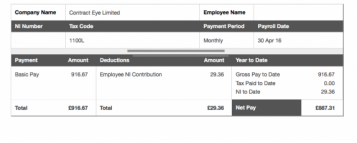
Employers, employees and the self employed pay National Insurance Contributions. What rates of NI do contractors pay in 2024/5? … [more]
The optimum salary for limited company directors in 2024/25

What is the optimum salary for a limited company director in the 2024/25 tax year? Read on to find out. … [more]
Employment Allowance – is your limited company eligible?

The Employment Allowance reduces the National Insurance employers pay by up to £5,000 per year. So, can your limited company benefit from this incentive in 2024/5? … [more]
2024/5 dividend tax guide for limited company directors

Limited companies of all sizes can distribute their profits to shareholders as dividends. This article explains what dividends are, how they are taxed, and how to properly account for them. … [more]
How much is the tax free dividend allowance in 2024/25?

The dividend allowance means the first £500 of dividends you receive are tax-free. But how does this allowance work in practice in the 2024/25 tax year? … [more]
What type of accounts do small companies file with Companies House?

This guide explains the format for filing annual accounts with Companies House each year - specifically the FRS105 and FRS102 frameworks, which apply to small companies. … [more]
Can my agent force me to use a particular umbrella company?

If you find a contract through a recruitment agency and want to use an umbrella company, can the agent insist you use a provider on their preferred supplier list (PSL)? What if I want to use a different umbrella? … [more]
How dividend waivers work – guide for company directors

When a company declares a dividend, the proceeds must be split equitably, according to the number of shares each shareholder owns. In some cases, it may be possible for one or several shareholders to 'waive' their rights to receive a dividend. … [more]
March 2024 Budget – little to cheer for most contractors

The headline announcement from today's Budget was a further cut in National Insurance for both employees and the self-employed. For most contractors, however, this was a Budget devoid of any standout measures or help for businesses. And no mention of … [more]
- 1
- 2
- 3
- …
- 34
- Next Page »